5 Common Mistakes New Runners Make at Somerset 5K Events
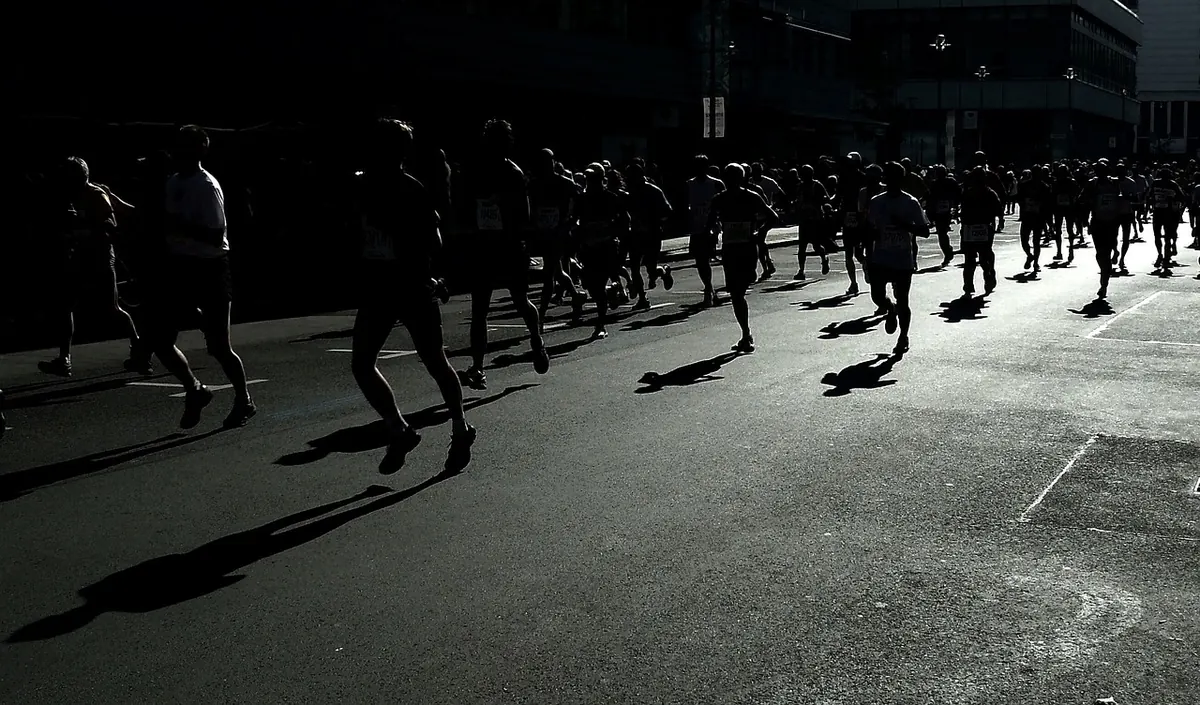
The first 5K is a nervous business. You have trained, you have a number pinned somewhere, and you have roughly forty-five minutes of adrenaline to manage. Most of what goes wrong on race day is not fitness. It is small decisions made in the wrong order — the warm-up you skipped, the pen you sneaked into, the litre of water you drank ten minutes before the start.
The good news is that these are the same six mistakes every year, in every town, and all of them have straightforward fixes. Whether you are lining up at a Saturday parkrun or a midweek summer series race on the edge of town, here is what to get right before the gun goes.
Nerves make people do one of two things: stand shivering by the barrier in a jacket, or hammer out a mile at close to race pace and arrive at the start already tired. Neither helps.
A 5K asks you to run hard from the first few minutes, and cold legs do not like that. Aim for ten to twelve minutes of easy jogging, finishing about ten minutes before the start. Then add a few drills — leg swings, walking lunges, a handful of high knees — and two or three short strides at roughly your intended race pace. That is enough to wake the legs up without draining them.
If it is a hot evening, keep the whole thing shorter and stay in the shade. If it is cold and wet, keep moving until the last possible moment, then hand your jacket to whoever is holding the bag.
Many local 5Ks use self-seeding rather than formal corrals. That means the only thing stopping you from standing on the front row is honesty, and honesty is in short supply when the countdown starts.
Starting too far forward costs you more than it saves. You will be passed by a stream of faster runners for the first kilometre, which is dispiriting, and you will be tempted to hang on to a pace you cannot hold. Starting ten rows further back costs you a few seconds and buys you a much better rhythm.
Seed yourself on a recent time or a realistic estimate. If you have never raced, start in the middle and spend the race passing people rather than being passed. It is a far better feeling, and the clock does not care where you began.
There are two classic errors. The first is drinking nothing all day because you are worried about needing the toilet, then arriving at the start thirsty. The second is downing half a litre in the ten minutes before the gun, which sloshes around for the first kilometre and often brings on a stitch.
A better approach:
If you take medication that affects fluid balance, or you have a heart or kidney condition, check with your GP or pharmacist before changing how you drink around a race.
Race day is a poor time to find out that a seam rubs or a pair of trainers needs breaking in. Blisters at kilometre two will define your whole race.
Wear shoes you have already run in — two or three outings is usually enough to know whether they are going to behave. Same for shorts, socks and a top. Cut your toenails a few days beforehand, not the night before. If you know you chafe, apply anti-chafe balm to the spots that always complain, and pin your number on the front of your shirt with four pins, not two.
Small races feel informal, which is part of the charm, but the practicalities still take time. Parking fills up, the toilet queue is longer than you think, and bag drop is never where you remember it.
Give yourself thirty to forty-five minutes on site. Collect your number early if you can, walk the last two hundred metres of the route so you know what the finish looks like, and find out where the water and the results are. Pack a dry top and a warm layer for afterwards, leave them in the car or with a friend, and know how you are getting home.
Adrenaline, a downhill start and a crowd of faster runners combine to make the first kilometre feel easy. It almost always is easy. That is the problem.
Go through the first kilometre slightly slower than your target and you will spend the last two passing people instead of watching them drift away. If you can talk in short sentences for the first few minutes, you are probably about right. Save the effort for the final kilometre, where it actually buys you something, and remember that a strong finish feels far better than a painful shuffle to the line.
Write this on your phone the night before and stop thinking about it.
Then eat, stretch if it helps, and write down what you learned. The second 5K is always easier than the first, mostly because you stop making these six mistakes — and start making a few new ones instead.
Photo: cocoparisienne / Pixabay
Previous Post
Winter Home Prep Checklist for Somerset Residents: Pipes, Sidewalks, and Emergency Kits
Next Post
Somerset School Budget Explained: Where the Money Comes From and Where It Goes